



Open-Label Long-Term Extension (LTE): GRAVITI & GALAXI 2 & 3
GRAVITI Trial Design1,2
The GRAVITI program was a randomized, double-blind, placebo-controlled, phase 3, treat-through study (N=340) in adult patients with moderately to severely active Crohn’s disease who had a history of inadequate response, loss of response, or intolerance to oral corticosteroids, immunomodulators (azathioprine, 6-mercaptopurine, methotrexate), and/or biologic therapy (ie, TNF blockers or vedolizumab).
View primary data- At Week 24, all participants were eligible to enter the extension phase. Note that LTE is from Week 48, whereas extension phase is from Week 24
GRAVITI Open-Label LTE
- Of the 114 patients randomized to TREMFYA® 100 mg SC q8w and 111 patients randomized to TREMFYA® 200 mg SC q4w in the maintenance study, 90% (103/114) and 98% (109/111), respectively, continued into the LTE as part of the LTE analysis set. The LTE analysis set included all patients who received at least 1 (partial or complete) dose of study intervention in the LTE
- Study was unblinded after final Week 48 maintenance analysis was completed. Patients randomized to placebo were discontinued after study unblinding and were not included in the open-label LTE efficacy analysis
GALAXI Trial Design1,2
The GALAXI program was a randomized, double-blind, controlled treat-through study (N=1021) that assessed TREMFYA® superiority vs both STELARA® (ustekinumab) and placebo in adult patients with moderately to severely active Crohn’s disease who had a history of inadequate response, loss of response, or intolerance to oral corticosteroids, immunomodulators (azathioprine, 6-mercaptopurine, methotrexate), and/or biologic therapy (ie, TNF blockers or vedolizumab).
GALAXI 2 & 3 Open-Label LTE
- All participants who, in the opinion of the investigator, will continue to benefit from treatment were eligible to enter the LTE
- Of the 286 patients randomized to TREMFYA® 100 mg SC q8w and 296 patients randomized to TREMFYA® 200 mg SC q4w in the maintenance study, 88% (251/286) and 86% (256/296), respectively, continued into the LTE as part of the LTE efficacy analysis set
- Study was unblinded after final Week 48 maintenance analysis was completed. Patients randomized to placebo were discontinued after study unblinding and were not included in the open-label efficacy analysis
GRAVITI and GALAXI LTE assessed efficacy and safety through 2 years2
Majority of patients were in clinical remission at 1 year and 2 years2*†
Of the patients who entered the LTE at Week 48
Clinical remission from Week 48 through Week 96 (Nonresponder imputation)
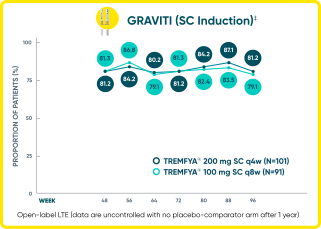
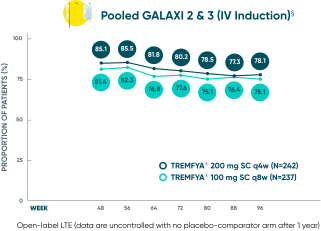
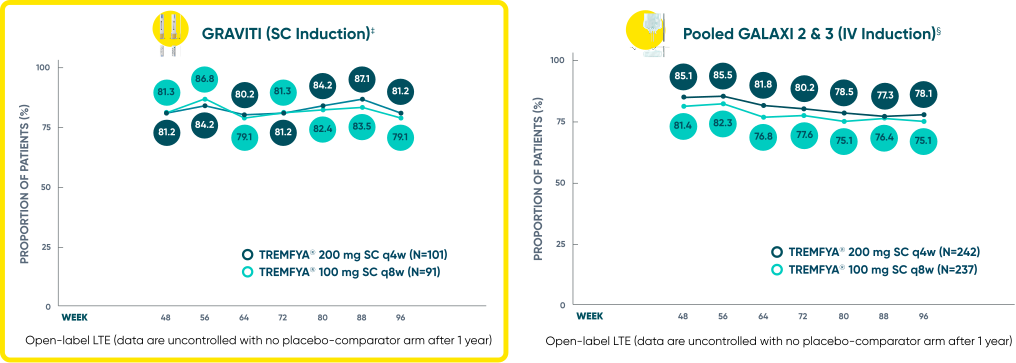
GRAVITI and GALAXI are separate studies with different endpoint assessments. Cross-trial comparisons are not to be made.
DATA LIMITATION: Clinical remission from Week 48 through Week 96 was prespecified but not multiplicity controlled. No statistical significance can be made.
Analysis rules with nonresponder imputation (NRI): Participants who had a Crohn’s disease–related surgery, had a prohibited change in Crohn’s disease medication, discontinued study intervention due to lack of efficacy or an adverse event of worsening Crohn’s disease, or discontinued study intervention due to COVID-19 infection prior to the designated visit were analyzed as nonresponders. For GALAXI, patients who had a dose adjustment (including “sham”) during Weeks 52-80, between Week 48 and the analysis timepoint, were considered not to have met the endpoint criteria. After accounting for these events, participants who were missing data at the analysis timepoint were analyzed as nonresponders.||
Study population in the LTE at Week 48 differed from the study population included in the label at Week 48 due to differences in participant inclusion criteria in the LTE analysis set. Subjects with Crohn’s-related surgery (with the exception of minor procedures) or a prohibited change in Crohn’s medications prior to Week 48 who remained on treatment and subsequently entered the LTE were excluded.
Use the lowest effective recommended dosage to maintain therapeutic response.
Open-label Long-Term Extension: GRAVITI
With TREMFYA®, ~45% of patients were in deep remission at 2 years2*
Among patients who entered the LTE
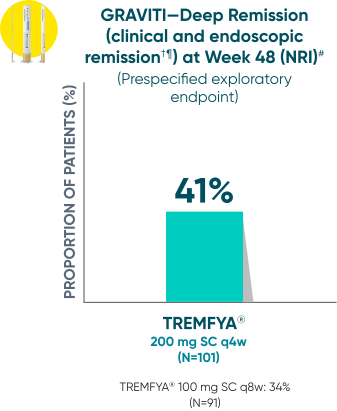
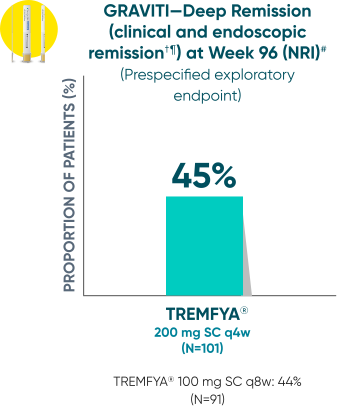
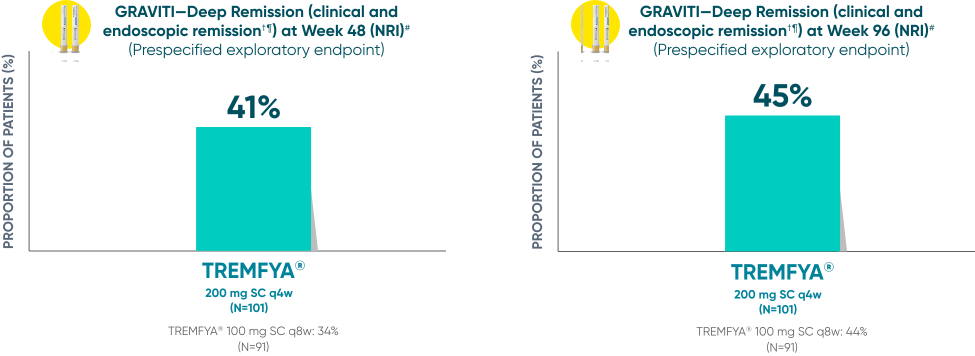
DATA LIMITATION: Deep remission at Week 48 and Week 96 was a prespecified exploratory endpoint but not multiplicity controlled. No statistical significance can be made.
Analysis rules with nonresponder imputation (NRI): Participants who had Crohn’s disease–related surgery, had a prohibited change in Crohn’s disease medication, discontinued study intervention due to lack of efficacy or an adverse event of worsening Crohn’s disease, or discontinued study intervention due to COVID-19 infection prior to the designated visit were analyzed as nonresponders. After accounting for these events, subjects with missing CDAI score or SES-CD at the study visit were considered not to have achieved endpoint for that visit.
Study population in the LTE at Week 48 differed from the study population included in the label at Week 48 due to differences in participant inclusion criteria in the LTE analysis set. Subjects with Crohn’s-related surgery (with the exception of minor procedures) or a prohibited change in Crohn’s medications prior to Week 48 who remained on treatment and subsequently entered the LTE were excluded.
Use the lowest effective recommended dosage to maintain therapeutic response.
*Week 48 was defined as 1 year. Week 96 was defined as 2 years.
†Clinical remission defined as CDAI score <150.2
‡LTE Analysis Set. Data are shown from all randomized participants who entered the long-term extension phase of the study and received at least 1 dose of study intervention (including a partial dose). Subjects with a Crohn’s disease–related surgery (with the exception of minor procedure) prior to Week 48 or a prohibited change in Crohn’s medications prior to Week 48 who remained on treatment and subsequently entered the LTE were excluded.
§LTE Efficacy Analysis Set. Data are shown from all randomized participants who entered the long-term extension phase and received at least 1 dose of study intervention (including a partial dose). Subjects with a Crohn’s disease–related surgery (with the exception of minor procedure) prior to Week 48 or a prohibited change in Crohn’s medications prior to Week 48 who remained on treatment and subsequently entered the LTE were excluded.
||For GRAVITI, patients who were dose-adjusted at Week 16 are not included in this data set.
¶Endoscopic remission was defined as SES-CD ≤4 and ≥2-point reduction from baseline and no subscore >1 in any individual component.2
#LTE Analysis Set. Data are shown from all randomized participants who received at least 1 dose of study intervention (including a partial dose) at or after Week 48.
CDAI=Crohn’s Disease Activity Index; IV=intravenous; LTE=long-term extension; q4w=every 4 weeks; q8w=every 8 weeks; SC=subcutaneous; SES-CD=Simple Endoscopic Score for Crohn's Disease.